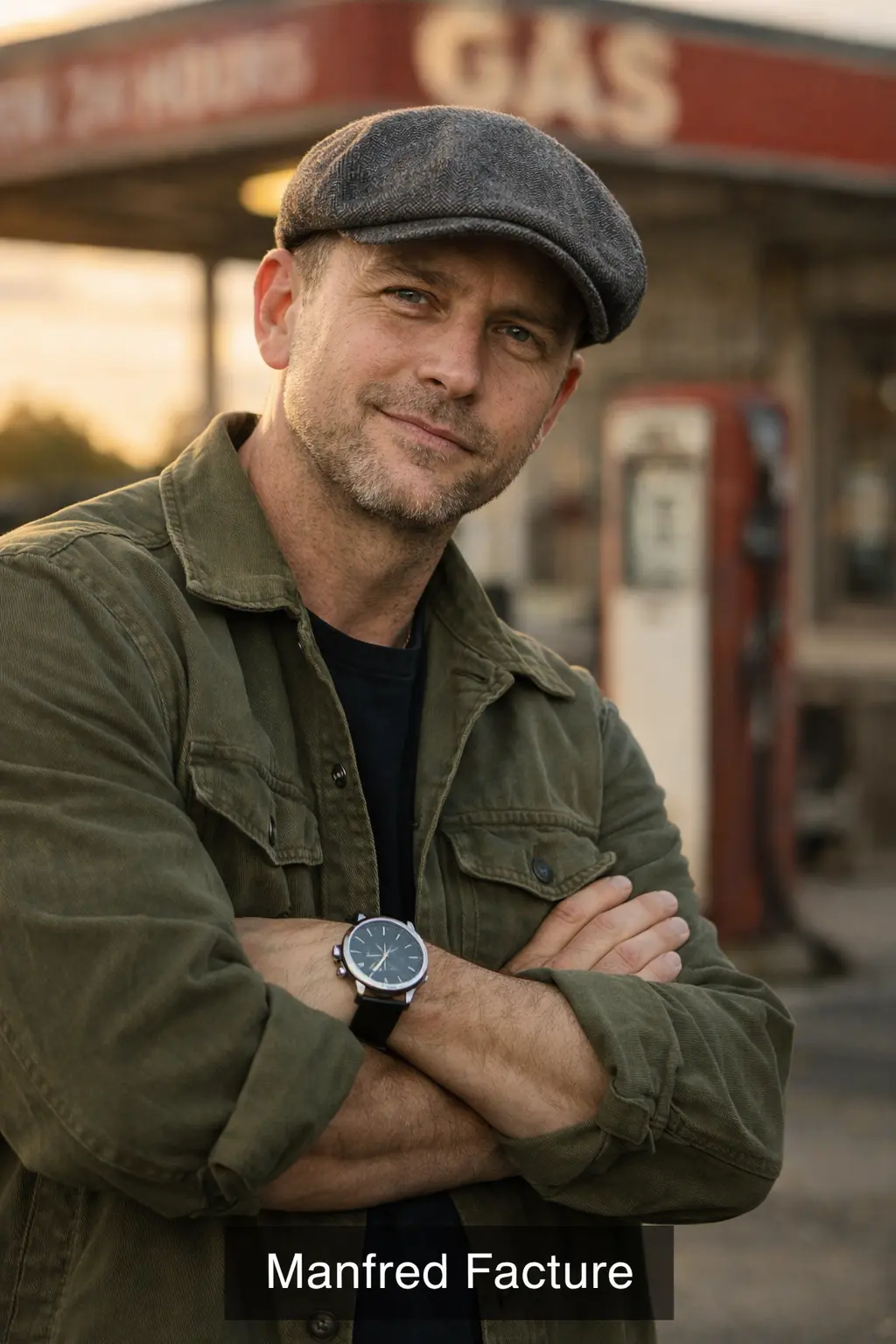
MANFRED FACTURE
Manfred Facture moves quietly in the uppermost tiers of the collector-car world, a man whose influence is felt far more often than his name is spoken. Among private collectors, museum trustees, and discreet family offices, he is regarded as one of the preeminent curators of rare British automobiles—someone trusted not merely to acquire cars, but to shape legacies.
Manfred’s relationship with automobiles began humbly and personally. As a young man, he purchased his first car, a 1952 Morris Minor, drawn to its honesty of design and the quiet ingenuity of postwar British engineering. That car taught him that great automobiles were not defined by excess, but by intent—by the clarity of thought behind their creation. He restored it himself, learning patience, research, and respect for originality long before those qualities became fashionable.
His second car proved formative. A 1968 Jensen Interceptor FF, with its groundbreaking all-wheel drive and restrained grand-touring presence, opened his eyes to the intersection of innovation, luxury, and understated performance. The Jensen didn’t simply broaden his taste—it sowed the seeds of his philosophy. Manfred came to believe that the most important cars were often those that quietly changed the course of engineering or design, rather than those that shouted the loudest.
From these beginnings grew a career defined by discernment. Over the last two decades, Manfred became the unseen architect behind some of Europe’s largest and most cohesive private collections of classic, vintage, and modern vehicles. His work extends well beyond British marques, but it is British cars—Bentley, Aston Martin, Jaguar, Jensen, and the lesser-known specialists—that remain his signature. He is known for assembling collections that tell stories: of technological evolution, of cultural moments, and of the people who built and raced the machines.
Manfred Facture has shaped the modern understanding of what a great collection can be—coherent, historically grounded, and quietly extraordinary. Collectors seek Manfred not simply for access, but for judgment. He advises on acquisitions, provenance research, restorations, and long-term stewardship, often discouraging purchases as readily as he recommends them. To him, a collection is not a display of wealth but a curated archive, where condition, originality, and historical context matter more than market trends.